

A vehicle that needs one repair is not automatically defective. Parts wear out, maintenance is necessary, and an isolated problem may be resolved quickly. However, when the same symptom returns, a repair does not address the concern, or the vehicle repeatedly becomes unavailable, a careful record can make the next steps much clearer. Owners researching model-specific concerns may also find Trailblazer mechanical issues explained useful as an example of the types of recurring problems drivers may need to document.
The goal is not to assume the worst or diagnose a vehicle without qualified help. It is to ensure safety, provide the repair facility with useful information, preserve warranty rights, and create a reliable timeline if the concern persists.
Why Recurring Vehicle Problems Matter
Recurring problems can affect more than convenience. Depending on the symptom, they may affect safe operation, daily transportation, confidence in the vehicle, and its value when it is traded or sold. A pattern is especially important when repair orders describe the same complaint, even if the shop uses different diagnostic language at each visit.
Separate ordinary maintenance from an ongoing concern. Oil changes, tire replacements, brake pad wear, and other scheduled services are not necessarily evidence of a defect. In contrast, repeated warning messages, stalling, loss of power, water intrusion, electrical failures, or persistent vibration deserve accurate and consistent documentation.
Start With Safety
Do not continue driving simply to see whether a serious issue will repeat. If a concern affects braking, steering, acceleration, tire condition, visibility, restraints, or other essential systems, move to a safe location when possible and seek roadside assistance or professional guidance. Tell the repair facility why you believe the vehicle may be unsafe, and ask directly whether it is safe to operate before taking it home.
Safety Steps To Follow
- Pull over safely and use hazard lights if needed.
- Take photos or video only when doing so does not create another risk.
- Record dashboard warnings, unusual sounds, smells, smoke, or fluid leaks.
- Arrange a tow when the vehicle cannot be driven safely.
- Keep the tow receipt and note where the vehicle was taken.
Check For Recalls And Complaints
A recall search is a useful research step, but it does not establish the cause of a particular vehicle’s symptom. Owners can search for recalls by VIN to identify unrepaired safety recalls tied to a specific vehicle. The same federal resource also provides general recall, complaint, investigation, and manufacturer communication information for vehicles by year, make, and model.
Save a screenshot or printout of anything relevant, including open recalls, manufacturer notices, and similar reported safety concerns. A qualified technician still needs to inspect the vehicle, because similar symptoms can have different causes.
Build A Complete Repair Record
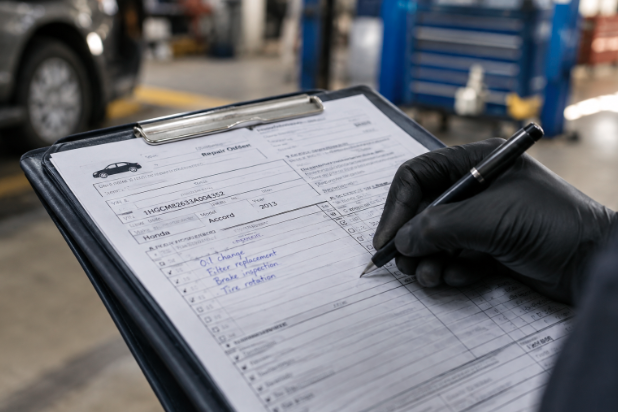
Create one folder, either digital, paper, or both, for the vehicle. Organization matters because a service history should show what happened before, during, and after every repair attempt.
- Purchase or lease paperwork and warranty documents.
- Every repair order, invoice, inspection report, and diagnostic result.
- Photos, videos, and screenshots of warning messages.
- Towing, rental-car, rideshare, and other transportation receipts.
- Emails, texts, case numbers, and notes from conversations.
- A running log of dates, mileage, symptoms, and repair outcomes.
Keep records even when an invoice says “no problem found” or “could not duplicate.” That document still shows that the concern was reported and that the vehicle was inspected on a particular date and mileage.
Describe The Problem Clearly
Intermittent problems can be difficult to reproduce, so vague descriptions are rarely helpful. State what you observed rather than guessing at the mechanical cause. For example, replace “the car felt strange” with “at approximately 45 mph, the check-engine light flashed, the vehicle hesitated during acceleration, and the issue stopped after it was parked for 20 minutes.”
Details That Help A Technician
- Date, time, mileage, speed, and driving mode.
- Weather, road, traffic, and towing conditions when relevant.
- Warning lights, messages, sounds, odors, shaking, or reduced power.
- Whether the problem occurred during starting, turning, braking, accelerating, or charging.
- Whether restarting the vehicle changes the specific symptom.
Ask the right questions at the repair shop
Before leaving the vehicle, ask that the repair order include your full complaint in plain language. At pickup, request a clear explanation of the outcome. Useful questions include:
- Was the reported concern reproduced?
- What testing was performed?
- What work, parts replacement, or software updates were completed?
- Was the vehicle road-tested after the repair?
- What should the driver watch for if the problem returns?
- Is the vehicle safe to drive now?
Track Out-Of-Service Time And Added Costs
Count more than repair visits. Record the drop-off date, pickup date, number of days the vehicle was unavailable, and whether it was returned without a confirmed correction. Also, retain receipts for towing and alternate transportation. These details show the real impact of repeated service appointments on work, school, caregiving, and travel.
Review Warranty Coverage
Read the applicable warranty or service contract before authorizing paid work. A manufacturer’s warranty generally covers specified defects or malfunctions for a stated time or mileage period, while an optional service contract is a separate purchased agreement with its own terms. Understanding the difference between a manufacturer’s warranty and a service contract can help owners identify coverage limits, maintenance obligations, deductibles, towing benefits, and required approval procedures.
Keep maintenance receipts and repair records. Coverage terms may require owners to show that recommended maintenance was completed, and records can help resolve questions about what was done and when.
Know When To Escalate The Matter
If the same concern persists after reasonable repair attempts, begin with the service manager and request a written review. Then contact the manufacturer’s customer-care department in writing. Provide a concise timeline, copies of repair orders, current mileage, and a factual explanation of how the issue affects safety, use, or value.
Keep copies of every response and do not wait indefinitely to learn what deadlines may apply. Consumer-protection rules vary by state and by the facts of the purchase or lease, so qualified local advice may be appropriate when serious problems persist.
Common Questions About Repeated Vehicle Problems
Does one repair visit prove there is a major defect?
No. A single visit may involve maintenance, a minor repair, or a problem that does not return. A repeated pattern is more useful than an isolated event.
What if the shop cannot duplicate the problem?
Ask that the complaint be recorded accurately. Provide timestamps, photos, videos, warning messages, and driving conditions that may help reproduce the issue later.
When should a driver seek additional consumer advice?
Consider it when a serious problem continues after repeated repair attempts, the vehicle spends substantial time in service, or the next step is unclear. Thorough records make any review more productive.
Final Takeaway
Repeated vehicle problems are easier to manage when safety comes first, and every event is documented. A detailed timeline, accurate repair orders, recall research, warranty paperwork, and proof of related costs can replace uncertainty with useful facts. That preparation helps technicians, manufacturers, and consumer professionals understand the problem and respond appropriately.
More about Full Removal