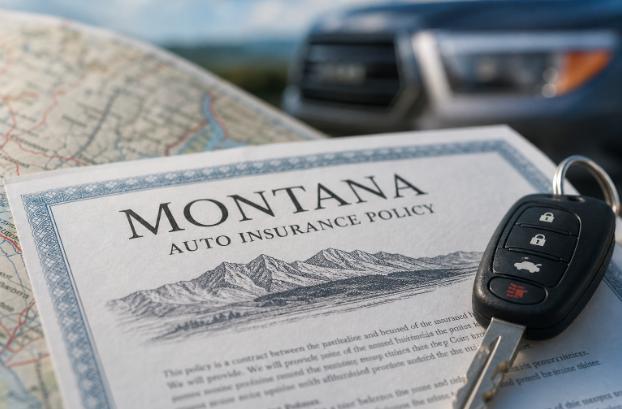


From long drives between communities to changing weather in the mountains and plains, Montana drivers face practical decisions that can affect both safety and household budgets. Whether you are renewing a policy, purchasing a vehicle, or adding someone to your household, it helps to learn more about auto insurance in Montana before selecting coverage. A good policy is not simply the one with the lowest monthly payment. It should reflect the vehicle you own, where and how often you drive, the savings you have available for a deductible, and the financial risk your household can reasonably manage after a crash or other covered loss.
Why Montana Drivers Should Review Coverage
An annual policy review can catch details that no longer match real life. Buying a newer vehicle, paying off a loan, moving from a rural area to a busier part of Billings, Bozeman, Helena, or Missoula, changing a commute, or adding a licensed household member can all change what you need from a policy. Start with the declarations page, which lists covered vehicles, drivers, limits, deductibles, and endorsements. For example, a driver who once used a pickup mainly for short local trips may now travel farther for work or recreation. More mileage does not automatically indicate a problem, but it is a reason to ensure the policy information remains accurate. The same applies when a vehicle’s value changes enough that collision or comprehensive coverage deserves another look.
The Basic Insurance Rules Every Driver Should Know
Montana requires liability insurance for vehicles operated on public roads. The minimum limits are $25,000 for injury or death of one person, $50,000 for injury or death of two or more people in one accident, and $20,000 for property damage. Drivers who are stopped for a traffic violation or are involved in a collision may need to show proof of insurance. The state explains current requirements and verification procedures through its vehicle insurance and verification guidance. Liability coverage is designed to help pay for injuries or damage you cause to others, up to the policy limits. Meeting the legal minimum is important, but it is different from deciding what level of protection makes sense for your assets, income, vehicle, and family circumstances. A serious crash can result in expenses exceeding a low liability limit.
Coverage Types Worth Comparing
- Liability coverage: Helps pay for eligible injury and property-damage claims when you are responsible for a crash.
- Collision coverage: May help repair or replace your vehicle after a crash, subject to its deductible.
- Comprehensive coverage: May apply to covered losses such as theft, hail, falling objects, fire, and animal strikes.
- Uninsured and underinsured motorist coverage: May help when an at-fault driver has no insurance or insufficient limits.
- Medical payments coverage: May help with eligible medical expenses after a covered accident.
- Rental reimbursement and roadside assistance: These options may help with temporary transportation or events such as flat tires, lockouts, and dead batteries.
What Can Change the Price of a Policy?
There is no single price for every Montana driver. Insurers may consider driving history, prior claims, age and driving experience, vehicle type, repair costs, safety features, annual mileage, location, selected limits, and deductible amounts. Available discounts and eligibility rules can also differ by company. The lowest premium is not always the strongest value. A quote may be cheaper because it has lower liability limits, a higher deductible, or fewer optional protections. Before accepting a lower price, consider whether you could comfortably pay the deductible and whether the remaining coverage would be enough for a difficult situation.
Seasonal and Regional Driving Risks
Montana’s road conditions can vary sharply by season and location. Winter travel can bring snow, ice, wind, reduced visibility, and longer stopping distances. Rural routes may involve long stretches with no fuel, repair shops, or reliable cellular service. Keeping warm clothing, water, a flashlight, and basic emergency supplies in the vehicle can make an unexpected delay less stressful. Wildlife also deserves attention, especially near dawn and dusk, and in wooded or open-range areas. Slowing down and scanning the roadside can give drivers more time to react. In hail-prone storms, comprehensive coverage may be relevant for vehicle damage. Before summer road trips, inspect tires, fluid levels, cooling systems, and towing equipment, then confirm that the policy reflects the vehicle and travel plans.
How Families Can Prepare Teen Drivers
Montana uses a graduated licensing process for drivers under 18. It begins with a learner permit and supervised experience before a first-year restricted license, followed by full driving privileges. Families can review the state’s requirements for drivers under 18, including current permit steps, required practice hours, passenger limits, and nighttime restrictions. Parents and guardians can reinforce the licensing rules with a written family driving agreement. Include rules for seat belt use, phone storage while driving, speed, passengers, curfews, fatigue, and never driving after alcohol or drug use. Practice should include parking lots, highway merges, rain, snow, rural roads, nighttime conditions, and safe responses to wildlife near the roadway.
A Simple Quote Comparison Checklist
- Gather license details for all household drivers and current information for every vehicle.
- List each vehicle’s year, make, model, mileage, safety equipment, and financing status.
- Request identical liability limits from each insurer.
- Compare collision and comprehensive deductibles side by side.
- Confirm whether uninsured motorist coverage, rental reimbursement, roadside assistance, or glass coverage is included.
- Ask which discounts apply and whether their qualifications can change at renewal.
- Read exclusions, claim procedures, payment terms, and cancellation provisions before switching.
Common Mistakes to Avoid
- Choosing coverage based only on the monthly payment.
- Leaving an old address, vehicle, or regular household driver off the policy.
- Assuming comprehensive coverage pays for normal mechanical wear or every breakdown.
- Raising a deductible without setting aside enough money to pay it after a loss.
- Waiting until after an accident to understand policy limits and the claims process.
Frequently Asked Questions
Is the state minimum always enough?
It is enough to meet Montana’s basic liability requirement, but it may not cover all costs from a major accident. Drivers should consider their personal financial situation when choosing limits.
Does a financed vehicle need more than liability coverage?
Many lenders require collision and comprehensive coverage while a vehicle loan remains outstanding. Check the loan agreement and confirm the insurer has the lender information it needs.
Can a teen driver affect household insurance costs?
Adding an inexperienced driver can change a household’s premium. Ask insurers about available training, student, or safe-driving programs, and compare equivalent coverage before deciding.
How often should drivers compare quotes?
Review coverage at renewal and after a major change such as a move, vehicle purchase, new driver, marriage, divorce, retirement, or job change. A fair comparison uses the same limits, deductibles, and coverage options.
Final Thoughts
Thoughtful vehicle planning in Montana means matching coverage and vehicle choices to your budget, vehicle type, driving routes, household needs, and comfort with financial risk. Drivers may also want to consider how seasonal weather, longer travel distances, commuting patterns, and changes in vehicle use affect their overall needs. Reviewing the policy each year can help identify changes in coverage, deductibles, limits, discounts, or household circumstances that may warrant attention. When comparing insurance quotes, an apples-to-apples approach is important so that differences in limits, deductibles, exclusions, and included features are considered alongside the premium rather than comparing price alone. Vehicle maintenance and consistent safe-driving habits are also part of practical vehicle planning, helping drivers stay attentive to their cars’ condition and everyday driving responsibilities. By reviewing these factors regularly and making adjustments when circumstances change,