
After a tree comes down, the remaining stump can keep a Jackson yard from feeling finished. Whether it sits beside a Fondren bungalow, near a driveway in Belhaven, or in a broad suburban lawn outside downtown, the right solution depends on how the space will be used next. Property owners comparing options for stump removal in Jackson, MS, should consider more than the visible wood above ground. The stump’s size, species, age, and placement can all affect the amount of work required and the best restoration approach. Jackson’s warm, humid climate can speed the breakdown of exposed wood, but a stump does not simply disappear on a convenient schedule. It can interfere with mowing, invite fungal growth, produce shoots, and consume valuable planting space. The best choice is usually the one that supports the long-term plan for the yard, rather than the quickest-looking fix. Thinking ahead also helps homeowners avoid paying to repair turf, beds, or hardscape that later have to be disturbed to address a buried root mass.
Why a Leftover Stump Still Matters
A stump can be a persistent obstacle. Low stumps and exposed roots create trip hazards, force awkward mowing patterns, and may damage mower blades. Decaying wood also holds moisture, which can attract insects and fungi. In clay-heavy or compacted areas common around Jackson, the ground can settle as roots and buried wood slowly decompose. That settling may be especially noticeable where the stump is close to a frequently used walking path, play area, or low section of lawn. For example, a homeowner may leave an old oak stump in place because it is out of the way. A year later, plans for a patio, garden border, or expanded lawn reveal that the stump and roots occupy the exact area needed. Addressing it early can prevent duplicate landscaping work and an avoidable repair to finished turf. It can also make routine lawn care easier by eliminating the need for repeated trimming around its edges.
Location: Heritage Tree Services | 112 Hillcrest Dr, Clinton, MS 39056, United States of America | (769) 990-5169
Stump Grinding vs. Full Removal
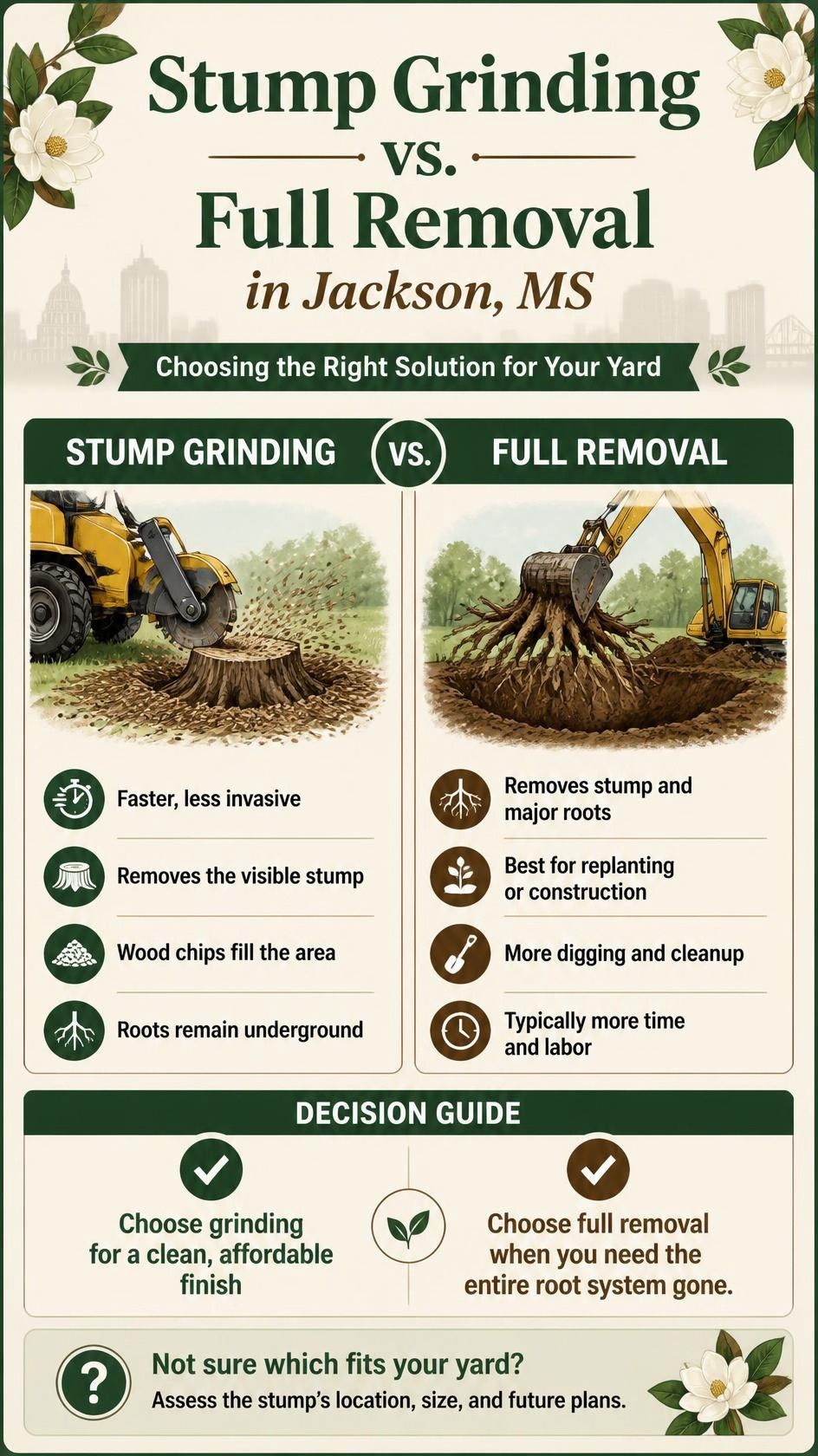
Stump grinding uses a specialized machine to reduce the stump to a depth below the soil surface. The remaining wood is converted into chips, while many of the deeper roots remain underground and decay naturally. Full stump removal involves excavating the stump and a larger portion of its major roots, which creates a more substantial opening in the yard. Neither method is automatically better in every situation; the preferred option depends on how deeply the ground must be cleared and how much disturbance the property can accommodate.
- Stump grinding: Best for reclaiming surface space for grass, mulch, or shallow planting with comparatively limited disturbance.
- Full removal: Best when the area needs to support a structure, deep planting, drainage work, or a new tree in nearly the same location.
- Grinding follow-up: Usually includes chip removal, soil replacement, grading, and seeding or mulching.
- Removal follow-up: Often requires more extensive backfilling, soil rebuilding, and surface restoration.
For a helpful overview of the equipment and restoration steps involved, this guide to the stump grinding process explains why removing chips and refilling the cavity with suitable soil matter after the work is complete. Leaving a pile of grindings directly in the hole can create a soft, uneven surface as the material decomposes, so the finish work matters as much as the cutting itself.
When Stump Grinding Makes Sense
Grinding is often the practical choice when the goal is a cleaner, safer yard without major excavation. It works well for an area that will become lawn, a flower bed, or a mulched landscape zone. It can also be preferable near fences, sheds, driveways, and foundations, where digging out large roots could create more disturbance than needed. In many residential settings, grinding provides enough clearance to restore the surface while preserving surrounding plants and established yard features. Jackson properties with narrow side yards, mature landscaping, or limited equipment access may benefit from grinding because it focuses on the stump itself. Keep in mind that deeper roots remain below grade. As they decompose, slight settling is possible, especially after periods of heavy rain. Adding topsoil later is a normal part of maintaining the restored area. If the stump has previously produced suckers or new shoots, homeowners should also monitor the surrounding area and promptly remove any regrowth.
When Full Removal Is Better
Full removal may be the stronger option when the site has a demanding future use. Consider it before installing a patio, walkway, retaining wall, shed, footings, irrigation line, or drainage feature. It can also make sense to plant a new tree near the former tree’s location, since the old root mass can limit the space available for healthy new roots. Removing more of the root structure may provide a cleaner working area for contractors who need to excavate, compact soil, or establish a stable base. Removal may also be appropriate for stumps with large surface roots or persistent shoots. However, excavation leaves a larger disturbed area. The finished result should include proper fill, grading, and attention to drainage so water does not collect in a low spot during Jackson’s frequent heavy rainfall. In some cases, the surrounding soil may need to be brought back up gradually and allowed to settle before final landscaping or hardscaping is installed.
Jackson, MS Site Factors to Consider
Access, Soil, and Stump Condition
Before choosing a method, evaluate gate width, fences, slopes, overhead limbs, and soft ground. A large hardwood stump in an open backyard may be straightforward, while the same stump behind a tight gate requires a different equipment plan. Diameter, wood hardness, decay, and root flare all affect the scope of work. Recent rain can also affect access, since heavy equipment may leave ruts in saturated turf or compact wet soil around the work area.
Utilities and Future Plans
Nearby foundations, driveways, irrigation lines, septic components, drainage pipes, landscape lighting, and buried utilities should be considered before disturbing the soil. Decide whether the space will become grass, shrubs, a garden, a new tree, or hardscaping. That single decision often makes grinding or removal much clearer. Marking planned bed lines, patio edges, or utility routes before work begins can help ensure the chosen service matches the final layout rather than only the yard’s current appearance.
Safety Before Work Begins
Stump grinders use powerful rotating cutting wheels that can throw chips, stones, and hidden debris. Keep children, pets, and bystanders well away from the work zone. Remove rocks, wire, toys, metal, and loose yard debris first, and mark private irrigation or lighting lines. Workers should also be alert for concealed hardware, such as nails, bolts, or fence remnants embedded in old stumps.
- Contact the appropriate utility-locating service before digging.
- Use eye, hearing, foot, and body protection.
- Do not operate unfamiliar rental equipment without training.
- Keep the work area clear and maintain a safe perimeter.
Stump-grinding hazards are serious enough to be specifically addressed in OSHA tree care safety resources. Professional operation, equipment guards, protective gear, and careful site preparation are not optional details. This is particularly important around parked vehicles, windows, neighboring property, and any area where debris could travel beyond the immediate work zone.
Aftercare and Yard Restoration
After grinding or removal, clear loose chips, roots, and debris from the area. Fill the cavity with quality soil rather than relying on fresh chips, which break down and can leave a depression. Add soil in light layers, compact gently, and grade the surface to direct water away from structures. Avoid creating a raised mound that channels runoff toward a driveway, foundation, or neighboring bed. Finish the site with grass seed, sod, mulch, or planting material suited to the location. Watch the area for several months, particularly after heavy rains. A small amount of settling is common and can usually be corrected with additional topsoil. For new grass, follow normal watering practices until roots establish, and keep foot traffic to a minimum while the seed germinates or the sod takes hold.
Common Questions
Can grass be planted after stump grinding?
Yes. Remove excess chips, add suitable soil, level the surface, and seed or sod the area. Plan to top-dress later if settling appears. A smooth, well-prepared soil layer gives grass roots a better chance to establish evenly.
Does grinding remove all roots?
No. Grinding typically addresses the stump and accessible upper roots. Deeper roots usually remain underground and decay over time. This is generally not a problem for lawn restoration, but it matters more where deeper excavation or structural support is planned.
Can a new tree be planted in the same spot?
Sometimes, but a nearby location is often better. Remaining roots, old wood, soil condition, disease history, and spacing all affect whether replanting in the exact location is appropriate. Shifting the new tree a few feet can provide better soil volume and reduce competition with decaying roots.
Conclusion
For Jackson, MS, property owners, stump grinding is often ideal for basic lawn restoration and low-disruption landscaping. Full removal may be more appropriate for construction, deep planting, drainage improvements, or major yard changes. A careful site review, clear cleanup plan, and proper soil restoration will help turn an unwanted stump into usable outdoor space. Choosing based on the yard’s next purpose, rather than simply removing what is visible, supports a cleaner result and fewer complications later.