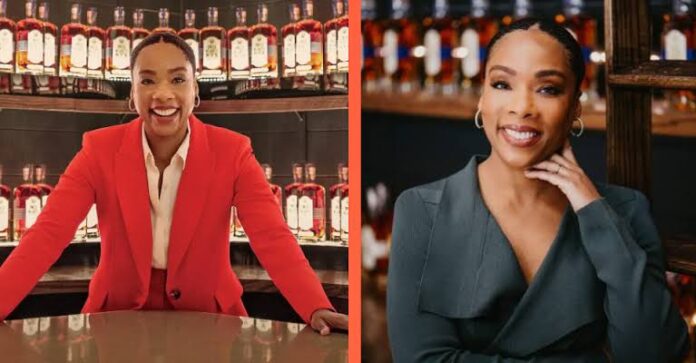


1. Introduction to Fawn Weaver Net Worth
Fawn Weaver is an American entrepreneur, author, investor, and businesswoman best known for founding Uncle Nearest Premium Whiskey, a spirits brand inspired by the legacy of Nearest Green, a formerly enslaved man recognized for his contribution to Tennessee whiskey-making. Her entrepreneurial journey attracted widespread attention as she transformed an overlooked historical story into a major business opportunity.
In 2024, Forbes estimated Weaver’s personal fortune at approximately $480 million, based on her reported ownership stake in Uncle Nearest and its estimated business valuation of $1.1 billion. However, this figure should not be treated as her current net worth in 2026. The company subsequently faced significant debt, receivership, and bankruptcy-related disputes that have complicated its financial position.
Understanding Fawn Weaver’s net worth therefore requires looking beyond the impressive valuation once associated with her whiskey company. Her business investments, real estate holdings, publishing career, and ownership arrangements all contribute to her financial story. Equally important are the legal and financial challenges that have affected her flagship business.
2. Who Is Fawn Weaver?
Fawn Weaver is a business leader whose career spans entrepreneurship, real estate, writing, and investment. She became particularly well known for combining historical research with brand development, using the story of Nearest Green to establish a distinctive position in the competitive American whiskey industry.
Weaver grew up in California and developed an interest in business before entering the spirits market. Her professional experience included management and hospitality-related work, along with investments in property and other ventures.
She later founded Grant Sidney Inc., a private investment company that became part of her broader entrepreneurial activities. These early experiences helped her understand business operations, investment decisions, and the importance of building valuable assets.
Her public profile grew considerably after the launch of Uncle Nearest Premium Whiskey. Rather than presenting the product as simply another whiskey label, Weaver built a brand around history, cultural recognition, and a previously underrepresented figure in the American spirits industry.
3. Fawn Weaver’s Estimated Net Worth in 2026
Determining Fawn Weaver’s exact net worth in 2026 is difficult because no independently verified, comprehensive statement of her current personal assets and liabilities is publicly established.
Forbes reported in May 2024 that Weaver’s approximately 40% ownership stake in Uncle Nearest, combined with real estate, supported an estimated personal fortune of $480 million. At that time, the company was valued at approximately $1.1 billion.
Those figures belong to an earlier financial period. They cannot automatically be carried forward after the company’s subsequent financial difficulties.
In 2025 and 2026, Uncle Nearest became involved in a dispute with its lender, entered receivership, and faced bankruptcy proceedings. These developments raised questions about its assets, liabilities, ownership interests, and future operations.
Consequently, the most responsible way to discuss Weaver’s net worth is to distinguish between her widely reported historical estimate and her presently uncertain financial position.
Her personal wealth depends not simply on how much her company might be worth, but also on how much debt is attached to relevant assets, whether her ownership remains intact, and what liabilities or other obligations she may personally have. Without reliable, up-to-date financial disclosures, a precise current figure would be speculative.
4. Uncle Nearest Premium Whiskey: The Main Source of Her Wealth
Uncle Nearest Premium Whiskey became the central business behind Weaver’s rise to financial prominence. The company was founded in 2017 to honor Nearest Green, whose historical contribution to Tennessee whiskey had received limited recognition in traditional accounts of the industry.
Weaver saw an opportunity to combine a distinctive historical narrative with a premium spirits product. The resulting business focused on quality, storytelling, consumer engagement, and the importance of recognizing Green’s legacy.
The company expanded its portfolio with different whiskey expressions, including bourbon and rye products. It also invested in production facilities, aging inventory, visitor experiences, and real estate associated with its distillery in Shelbyville, Tennessee.
These activities helped the company establish a recognizable identity and attract customers beyond its original market.
For Weaver, the business offered more than sales revenue. As a major shareholder, she could potentially benefit from an increase in the value of the company’s brand, inventory, property, and other assets.
Nevertheless, a company’s valuation does not represent the personal cash available to its founder. Ownership percentages, outstanding loans, operating expenses, and legal claims all affect how much an owner can ultimately realize from a business.
5. How Uncle Nearest Achieved Its Billion-Dollar Valuation
In 2024, Forbes estimated Uncle Nearest’s value at approximately $1.1 billion, placing it among the most prominent Black-owned spirits businesses in the United States.
Several factors contributed to this valuation. First, the company operated in the premium whiskey market, where established brands can command strong prices and build loyal customer bases.
Second, the historical story behind Nearest Green differentiated the brand from competitors. Its identity connected whiskey production with a broader discussion about recognition, heritage, and American history.
Third, Weaver pursued an ownership structure that emphasized investment from numerous individual backers rather than depending primarily on conventional venture capital or private equity firms. Forbes reported that she and her husband maintained substantial voting control through their combined arrangements.
The company also developed a physical destination around its distillery, creating opportunities for tastings, tourism, hospitality, and direct sales.
These elements helped make Uncle Nearest more than a product on store shelves. It became a business with several connected sources of commercial value.
However, a valuation is an estimate rather than a guaranteed sale price. Changes in consumer demand, borrowing costs, cash flow, and creditor claims can substantially affect what investors or buyers are willing to pay.
6. Real Estate Investments and Property Holdings
Real estate has also played an important role in Weaver’s business strategy. Her approach has emphasized owning land and physical assets alongside developing a recognizable consumer brand.
In its 2024 profile, Forbes reported that Weaver and her husband had accumulated substantial property holdings in Tennessee, including land connected to the distillery and additional acreage in the surrounding area.
The distillery’s property offered several potential advantages. It supported production and aging operations, provided space for tourism, and helped establish a physical home for the brand’s historical narrative.
Property ownership can contribute to long-term wealth through appreciation, rental income, development opportunities, or commercial use. However, real estate is not automatically profitable, particularly when properties are financed with substantial debt.
The financial difficulties surrounding Uncle Nearest also brought certain property valuations into dispute. Reports in 2026 described competing assessments of the distillery, associated land, and other assets.
For that reason, historical property estimates should not be treated as proof of their present market value or of Weaver’s current equity in those properties. Mortgages, liens, ownership arrangements, and legal proceedings all matter when calculating net worth.
7. Grant Sidney Inc. and Other Business Ventures
Beyond whiskey, Weaver’s entrepreneurial activities have included Grant Sidney Inc., her private investment company. Such a business can provide a structure for managing investments, developing commercial projects, and pursuing opportunities across different industries.
Her experience in property investment and business management helped establish the foundation for her later work in spirits.
Weaver has also supported businesses in the broader beverage industry. Her investment interests have included efforts to help underrepresented entrepreneurs gain access to funding and commercial opportunities.
Diversification can be valuable because it reduces dependence on a single source of income. An entrepreneur who owns interests in several businesses may have more opportunities to generate returns than someone whose wealth is concentrated in one company.
Nevertheless, the existence of multiple ventures does not automatically establish their financial contribution. Public information does not provide a complete, independently verified breakdown of the present value of every investment associated with Weaver.
Her financial position must therefore be evaluated using documented assets and liabilities rather than assuming that every past project remains profitable or retains its earlier valuation.
8. Fawn Weaver’s Career as an Author
Writing has been another important part of Weaver’s professional career. Before becoming widely recognized in the whiskey industry, she established herself as an author interested in relationships, personal development, and storytelling.
Her books include Happy Wives Club, which explores marriage and relationships, and The Argument-Free Marriage, which offers perspectives on communication between partners. These publications helped introduce her work to readers outside the business world.
In 2024, Weaver published Love & Whiskey, a book exploring the history behind Uncle Nearest, the people associated with Tennessee whiskey, and her own journey toward building the brand. The project reflects the extensive historical research that became a defining part of her business approach.
Book sales, publishing arrangements, speaking engagements, and related professional opportunities can contribute to an author’s earnings. However, the amount an individual author earns depends on factors such as sales volume, royalties, advances, and contractual terms.
Although Weaver’s writing career adds another dimension to her professional portfolio, reliable public information does not establish a precise amount that her books have contributed to her overall fortune.
9. Business Strategy and Investment Philosophy
One of the most notable aspects of Weaver’s career has been her emphasis on ownership and long-term control. Rather than focusing exclusively on short-term growth, she has spoken about the importance of retaining meaningful influence over a business and its assets.
Her strategy for Uncle Nearest involved raising capital from multiple individual investors while seeking to preserve substantial voting power. This approach allowed the company to pursue expansion without relying entirely on traditional institutional investors.
Weaver also understood the importance of developing a compelling brand identity. By connecting a premium whiskey product with Nearest Green’s historical legacy, she created a story that distinguished the company in a crowded marketplace.
Another part of her strategy involved combining consumer products with physical assets. The distillery, surrounding land, visitor facilities, and hospitality offerings were intended to support the business over the long term.
However, every investment strategy involves risks. Maintaining ownership control does not eliminate borrowing costs, operational challenges, or changes in market demand. The subsequent financial difficulties at Uncle Nearest illustrate why strong branding and ambitious expansion must be supported by sustainable cash flow and effective financial management.
10. Financial Challenges and Legal Disputes
Any discussion of Fawn Weaver’s net worth in 2026 must account for the serious financial challenges involving Uncle Nearest.
The company entered receivership in 2025 following disputes with its lender, Farm Credit Mid-America, over loans and its financial condition. In March 2026, Uncle Nearest filed for Chapter 11 bankruptcy protection while the dispute continued.
Bloomberg Law reported that the lender had a claim of approximately $108 million. The company and its founders disputed aspects of the allegations surrounding its finances and defended the value of its business and assets.
In July 2026, reporting by The Tennessean, republished by Yahoo Finance, stated that the court-appointed receiver had removed Weaver and her husband from their leadership positions, with the decision disclosed in a court filing.
These developments are important because a business can possess valuable inventory, property, and intellectual property while still experiencing serious cash-flow problems. A company may struggle to meet its financial obligations even when its owners believe its underlying assets are worth considerably more than its outstanding debts.
The legal proceedings do not, by themselves, establish Weaver’s precise personal net worth. Company liabilities and personal liabilities are not necessarily the same, and the consequences depend on ownership structures, guarantees, court decisions, and other legal details.
Readers should therefore distinguish reported allegations, the founders’ responses, and established procedural developments rather than treating any single claim as a complete account of the company’s finances.
11. Lifestyle, Philanthropy, and Personal Priorities
Weaver’s public image has largely centered on entrepreneurship, historical preservation, writing, and expanding opportunities for other business owners. Her work has also emphasized the importance of recognizing Black contributions to American business and cultural history.
Through initiatives associated with the Nearest Green Foundation and broader industry efforts, she has supported educational and entrepreneurial objectives connected with preserving Green’s legacy and encouraging economic opportunity.
Weaver has also been associated with programs intended to help underrepresented beverage entrepreneurs develop their businesses. These efforts reflect an interest in creating opportunities beyond her own company.
Philanthropic commitments can influence how entrepreneurs allocate their resources, although donations and charitable activities should not be confused with personal income or investment returns.
Similarly, public appearances, property ownership, and professional achievements cannot provide a complete picture of someone’s private financial circumstances. A luxury lifestyle or a high-profile business does not necessarily reveal the amount of cash, debt, or equity an individual holds.
For Weaver, her legacy is connected not only with her business ambitions but also with the historical recognition of Nearest Green and the broader significance of ownership in American entrepreneurship.
12. Future Financial Outlook and Conclusion
Fawn Weaver’s financial journey demonstrates both the possibilities and the risks of building a business around a distinctive idea. Her work helped transform the story of Nearest Green into a widely recognized whiskey brand, and her earlier reported net worth reflected the substantial valuation associated with Uncle Nearest during its period of rapid growth.
However, the company’s later financial distress has made her current wealth much more difficult to assess. The earlier Forbes estimate of $480 million remains a historical figure, not a verified estimate for October 2026.
Her future financial position will depend on several factors, including the outcome of legal proceedings, the treatment of creditor claims, the valuation and disposition of business assets, and the status of her remaining investments and property interests.
If Uncle Nearest’s assets retain significant commercial value, there may be opportunities for restructuring or continued business operations. At the same time, outstanding debts and competing claims can substantially reduce the value ultimately available to shareholders. The outcome cannot be predicted with confidence from company valuations alone.
In conclusion, Fawn Weaver’s net worth is best understood as a changing and currently uncertain financial picture rather than a single confirmed number. Her entrepreneurial achievements, writing career, investment activities, and role in bringing Nearest Green’s history to a wider audience remain significant parts of her story. Yet her recent business challenges show why a company’s estimated valuation should never be confused with its founder’s personal wealth.
Her experience offers a useful lesson for aspiring entrepreneurs: creating a recognizable brand and building valuable assets are important achievements, but sustainable financial success also depends on managing debt, protecting cash flow, and maintaining a realistic understanding of risk.
Click also – Joe Rogan Net Worth